
What is a Manometer?
What is a Manometer?
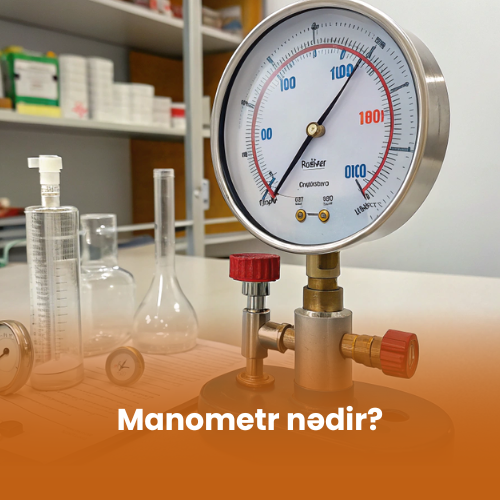
A manometer is a device used to measure the pressure of gases or liquids. Simply put, it tells us how much pressure is inside pipes, tanks, or various systems. Think of it as the “eyes” of pressure – while we can’t see it, the manometer gives us precise numbers. Today, manometers are used everywhere, from factories to cars.
History of the Manometer
The first manometers were created in the 17th century by Italian physicists Evangelista Torricelli and Blaise Pascal, who worked on atmospheric pressure measurements. Later, during the Industrial Revolution, manometers became widely used in steam engines. Today’s digital manometers are advanced versions of these early mechanical models.
Working Principle of a Manometer
Manometers measure the difference between internal pressure and external atmospheric pressure. Mechanical manometers use elastic tubes that bend, while electronic manometers rely on sensors to provide readings.
Types of Manometers
Mechanical Manometers
These operate with a metal tube that bends under pressure, transferring the movement to a pointer. The Bourdon tube manometer is the most common type.
Electronic Manometers
These use pressure sensors and display the reading on a digital screen. They are more accurate and convenient to use.
Liquid Column Manometers
These consist of U-shaped glass tubes where the height of the liquid column is used to determine pressure. They are commonly used in laboratories.
Applications of Manometers
Manometers are widely used in the oil and gas industry, chemical plants, medical equipment, automotive systems, and water supply or heating systems.
Structure of a Manometer
A manometer consists of a scale, pointer, elastic tube, and casing. Materials typically include stainless steel or durable plastics.
Calibration of Manometers
Regular calibration is essential for accurate results. Calibration is usually performed in specialized laboratories and is recommended annually.
Factors to Consider When Choosing a Manometer
Purpose, pressure range, and durability are key considerations. High-pressure models are suited for industrial use, while simpler mechanical models are ideal for home use.
Safety Rules
Always check if the manometer is functioning correctly, eliminate leaks, and handle high-pressure systems with caution.
Difference Between Manometer and Barometer
A barometer measures atmospheric pressure, while a manometer measures pressure inside closed systems. One is for the external environment, the other for internal.
Advantages of Manometers
They are simple, reliable, long-lasting, and highly accurate devices.
Modern Innovations
Smart manometers can now synchronize with smartphones, enhancing safety in industrial facilities.
Prices and Market Situation
Prices range from $10 to several hundred dollars depending on the type and accuracy. Both local and foreign brands are available in Azerbaijan’s market.
Use at Home
In households, manometers are mainly used to check gas cylinders and car tire pressure. Simple and affordable models are sufficient for this.
Conclusion
Manometers play an essential role in many aspects of life. They ensure safety and help monitor technical processes. With advancing technology, smarter and more precise manometers are expected in the future.
FAQ
1. What does a manometer measure?
It measures the pressure of gases and liquids.
2. What is the difference between a manometer and a barometer?
A barometer measures atmospheric pressure, while a manometer measures pressure in closed systems.
3. How many types of manometers exist?
Mechanical, electronic, and liquid column manometers are the main types.
4. How are manometers calibrated?
They are checked and adjusted against standard pressure values in specialized laboratories.
5. Where are manometers used?
They are widely used in industry, medicine, automobiles, and household appliances.